 Parler
 Gab
Gab Copy
Copy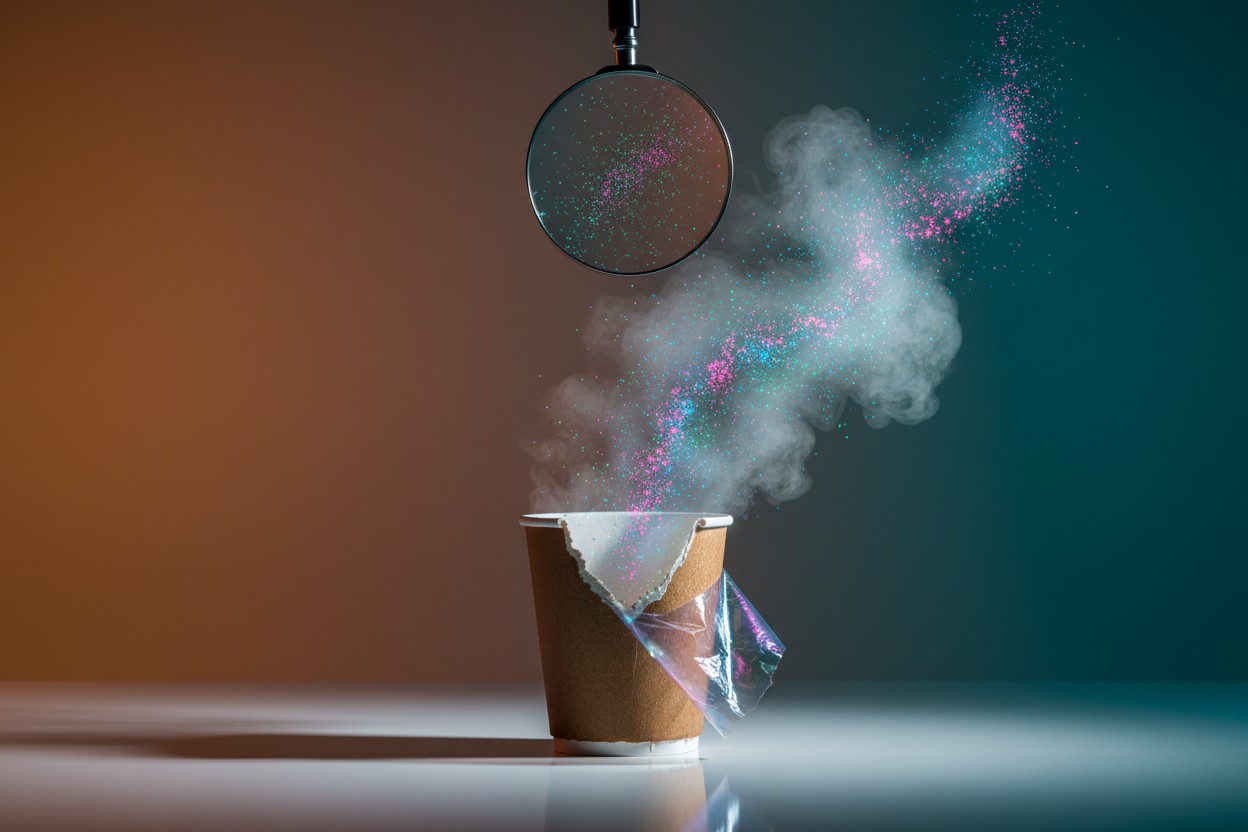
Study Methodology: Researchers Tested Cups Under Normal Use Conditions
Scientists designed the experiment to simulate the conditions of ordinary use rather than extreme scenarios. The UQ research team exposed plastic-lined paper cups to hot water for a short soak period, replicating the process of making a cup of tea or coffee [3]. After this brief exposure, researchers analyzed the water samples for the presence of both microplastic and nanoplastic particles, which can enter the body through the gut and other pathways [4]. The test compared two distinct types of cup lining. One type was lined with polyethylene (PE), a standard fossil fuel-based plastic used widely in food packaging to create a waterproof barrier. The other type was lined with polylactic acid (PLA), a bioplastic derived from renewable resources like corn starch, which is frequently touted as a compostable and more sustainable substitute. By testing both materials under identical conditions, the researchers were able to isolate and quantify the particle-release behavior of each lining type, providing a direct comparison of their contamination potential during routine hot beverage consumption [5].Biodegradable Lining Released More Particles, Researchers Reported
The study reported that the PLA-lined cups, despite their biodegradable label, produced a total particle mass that was 12 times higher than that of the PE-lined cups. According to the researchers, this disparity is attributable to the size of the particles being released. The PLA cups shed larger particles, which increased the overall mass of plastic contaminating the water. Okoffo stressed that the findings should not be misinterpreted as a directive for consumers to abandon paper cups entirely. "This does not mean that people should necessarily stop using paper cups, or that PLA is inherently unsafe," he said, adding that the implications for human health are still unclear. "But the impact of plastic particles on human health is unclear, and we know that the chemicals in plastic are not meant to be consumed" [1]. The contamination originates from the cup's structural design, according to the study. While the bulk of the cup is composed of paper fibers, a thin plastic inner coating is applied to prevent the liquid from soaking through and weakening the structure. This coating is essential for the cup's function but represents the direct source of the particles that end up in the beverage. The study authors noted that while the presence of plastic in the environment is a well-documented problem, the direct release of these particles into food and drink items during standard preparation represents an immediate and personal exposure route that has not received adequate attention [6].Microplastics Have Been Detected in Human Organs, Prior Research Found
The health relevance of this contamination stems from a growing body of scientific literature that has located microplastic particles inside the human body. Unlike larger debris, these particles range in size from one micrometer to five millimeters in diameter, while the far smaller nanoplastics measure roughly one-thousandth the width of a human hair, allowing them to slip through biological barriers. Prior research has detected microplastics in various human organs, including the brain, testicles, heart, stomach, lymph nodes and placenta [7]. A large-scale review from the University of California, San Francisco has suggested potential links between these particles and harm to the reproductive, digestive and respiratory systems, with researchers positing a connection to colon and lung cancer. Other investigations have reported associations between microplastic contamination and an elevated risk for heart attack and stroke [8]. Scientists have also begun to trace the movement of these particles through the body. Because of their small size, microplastics and nanoplastics can pass through barriers in the gut, lungs, and skin. From there, they can enter the bloodstream and travel to distant organs, where they may accumulate and trigger inflammatory responses [9]. While researchers caution that the field is still young and data on long-term effects are limited, the ubiquity of these particles in beverages and the recent findings regarding their presence in organ tissues have prompted calls for more urgent investigation into the toxicological impact of these materials. The findings from the coffee cup study add to a broader pattern of exposure that scientists say begins with everyday eating and drinking habits [10].Researchers Urge Safety Assessments, Product Warnings for Food-Contact Materials
In light of the findings, the research team is advocating for significant changes to how food-contact materials are regulated and manufactured. Okoffo stated that nanoplastic release should be included in the official safety assessment of food-contact materials, with particular attention paid to products that are intended to be used with hot beverages. This suggests that current regulatory frameworks may be inadequate because they do not account for the generation of these sub-visible particles under normal heating conditions. The authors reported that manufacturers could mitigate this issue by developing cup linings that release fewer plastic particles when they come into contact with hot liquid [1]. The researchers are also calling on regulators to consider implementing safety guidelines or specific product warnings for consumers. The study highlights a disconnect between environmental sustainability and immediate human health, noting that materials designed to break down quickly in the environment may, in fact, shed more particles into the contents of the cup. Okoffo emphasized that the materials used in these products must be evaluated holistically, stating: "The materials used in food-contact products need to be evaluated not only for their environmental sustainability, but also for their particle-release behavior during everyday use." The results, he added, confirm that plastic-lined paper cups "release substantial quantities of micro- and nanoscale plastic material when exposed to hot water" [3].References
- NaturalNews.com. "Heat turns everyday plastics into a microplastic health crisis, experts warn". November 7, 2025.
- BrightLearn.ai. "The Heat of the Moment: How Your Coffee Cup Unleashes a Hidden Stream of Microplastics". May 13, 2026.
- NaturalNews.com. "Your morning cup of tea could be serving billions of microplastics, new study warns". October 31, 2025.
- Mercola.com. "Pervasive Microplastics Are Damaging Your Cel..." December 22, 2021.
- Mercola.com. "Baby Bottles Release Millions of Microplastic". November 18, 2020.
- Mercola.com. "Microplastic Menace: Are You Swallowing a Cre..." May 11, 2023.
- ChildrensHealthDefense.org. "Microplastics-Detected-in-Human-Testis-and-Se". April 27, 2023.
- ActivistPost.com. "Study Links Microplastics in Arterial Plaque to Fourfold Increase in Stroke Risk". July 18, 2026.
- Trends-Journal-2023-02-06.
- NaturalNews.com. "The invisible ingredient: How eight common foods deliver a daily dose of plastic". August 4, 2026.
Explainer Infographic


Deadly wildfires force mass evacuations in Türkiye’s Antalya Province
By Cassie B. // Share

Trump’s Oil Holdings Gain Millions Amid Iran War As Accounts Continue Trading
By Garrison Vance // Share
Study Links Dry-Cleaning Chemical Exposure to Triple Risk of Liver Scarring
By Iva Greene // Share

Trump Predicts Iran War Will End “Immediately” After November Midterms
By Garrison Vance // Share

CDC Quietly Funded Pro-Vaccine Podcasts Through $5.75 Million in Grants, Records Show
By Morgan S. Verity // Share

Berberine Review Connects Metabolic Effects to Gut Health
By Coco Somers // Share



Ukraine’s Patriot missile stockpile runs dry as Trump-Zelensky feud boils over
By isabelle // Share

Thyroid diet myths busted: Broccoli is fine, but your fancy sea salt isn’t
By isabelle // Share