 Parler
 Gab
Gab Copy
Copy
The Political Timeline and Military Strategy
Trump's statement suggests the White House may be calibrating military operations around the electoral calendar. Reports indicate that Secretary of State Marco Rubio has informed allies that the White House is not preparing new attacks on Iran and will instead focus on enforcing sanctions against the Islamic Republic [1]. This posture aligns with an apparent strategy to maintain a low-level conflict that preserves the status quo until after the midterms, though analysts note Tehran will have its own ideas about escalation [1]. The president's comments, reported by multiple outlets, came in response to questions about the trajectory of the war [3]. Trump said, "I think the war is going to end immediately after the election," repeating the assertion on multiple occasions [3]. The midterm elections, set to determine control of Congress, are scheduled for Nov. 5 – roughly two months from the date of his remarks [3].Democratic Criticism and the Six-Month Mark
U.S. Democrats have made Trump's foreign policy a central issue as the Iran war reaches its six-month milestone. In a coordinated campaign, Democratic leaders slammed the administration for dragging out the conflict, using the phrase "No end in sight" to characterize the military engagement [4]. The criticism comes as initial reports indicated no U.S. casualties in recent exchanges, though Iran had not yet confirmed the full extent of damage or casualty figures at the time of reporting [4]. State media in Iran mentioned civilian deaths in some areas, including an incident at a wedding ceremony in Hormozgan Province [4]. The Democratic messaging strategy frames the prolonged war as a failure of the administration's foreign policy approach. The White House did not immediately respond to a Reuters request for comment on the Democratic criticisms [4]. The political pressure comes at a time when public attention is increasingly focused on the economic consequences of the conflict, particularly rising fuel prices that the president has directly attributed to the war [2].Wider Regional and Historical Context
The current conflict sits within a broader pattern of American military engagement in the Middle East that has drawn criticism from observers who see parallels with past interventions. Critics argue that the belief that overwhelming firepower can force sovereign nations to comply has defined American foreign policy for decades, a perspective that some say describes the Trump administration's war with Iran [1]. The regional dynamics extend beyond the immediate U.S.-Iran confrontation, with historical significance attached to the Strait of Hormuz as a critical chokepoint for global energy supplies [1]. Moreover, the conflict has also drawn in regional actors with their own interests. Israeli leaders have made clear their perspective on the war, with statements describing the toppling of Iran as a central mission [1]. These regional dynamics complicate any immediate end to hostilities, as multiple parties have interests that extend beyond the U.S. electoral calendar. The Trump administration has reportedly sought to keep things "quiet" related to the Iran war and Strait of Hormuz leading into the elections, according to sources familiar with the strategy [1].Economic Consequences and Oil Prices
The president has repeatedly blamed rising oil prices on the war, stating that prices will not come down until after the midterm elections [2]. This direct linkage between the conflict and global energy markets has become a central element of the administration's public messaging about the war. Oil price fluctuations have been driven by disruptions to shipping through the Strait of Hormuz, where Iran has targeted commercial vessels [1]. The administration has described its approach to Iran as an "economic D-Day," signaling an emphasis on sanctions and economic pressure alongside military operations [1]. This dual-track strategy aims to degrade Iran's capabilities while simultaneously pressuring its economy, though the effectiveness of this approach remains unclear as the conflict continues into its sixth month.Conclusion
Trump's prediction that the Iran war will end "immediately" after the midterm elections represents a significant statement about the administration's war timeline and its relationship to domestic politics. The president's framing suggests that Iran's capacity to sustain the conflict is nearing its limit, though the six-month duration of the war and the ongoing attacks on shipping suggest otherwise. With Democrats making the war a central campaign issue and oil prices rising, the electoral stakes of the conflict have become increasingly clear. The coming months will test whether the president's prediction proves accurate or whether, as critics suggest, the war has no clear end in sight. The administration's reported strategy of maintaining a low-level conflict until after the elections, combined with Iran's demonstrated capacity to respond, creates significant uncertainty about the trajectory of the war.References
- Middle East Eye. Trump says Iran war will end 'immediately' after midterm elections.
- Middle East Eye. Watch: Trump says Iran war will end 'immediately' after US midterm elections.
- The Epoch Times. Trump Predicts Iran War Will End After 2026 Midterm Elections.
- Zero Hedge. 'No End In Sight': Democrats Make Trump Foreign Policy A Central Issue After 6-Months Of Iran War.
Explainer Infographic


Former Google DeepMind Researcher Resigns, Warns AI Could “Kill Us All”
By Chase Codewell // Share

Study Finds Foam Mattresses Can Expose Infants to Toxic Chemicals
By Coco Somers // Share
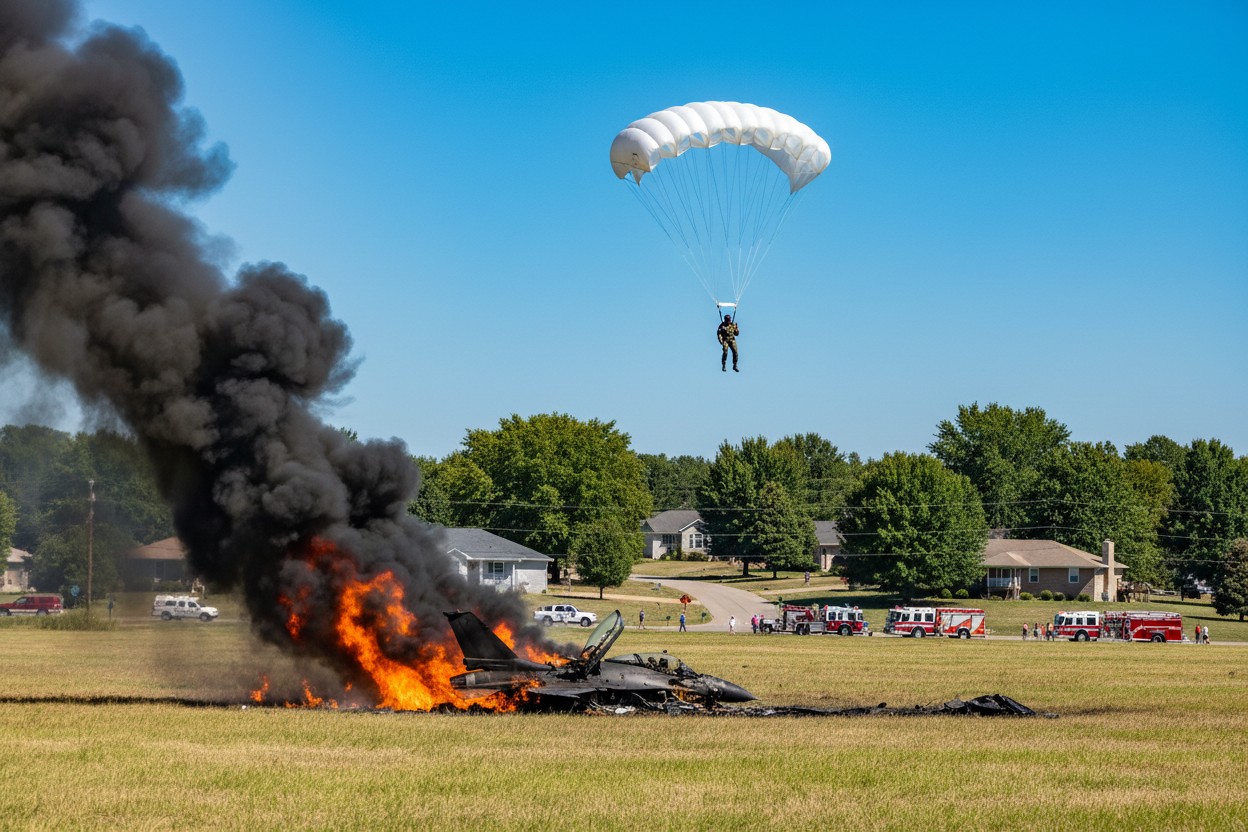
F-16 Crash Prompts Urgent Evacuation in Michigan’s Grand Traverse County
By Edison Reed // Share

U.S. Denies Visa to Palestinian Authority President Abbas for Second Consecutive UN General Assembly
By Garrison Vance // Share
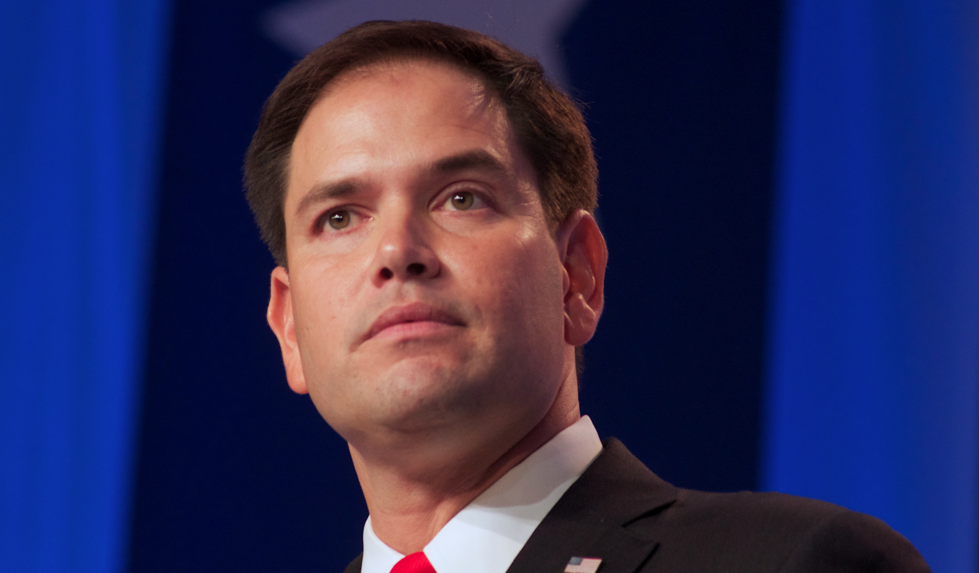
Rubio blocked Iran peace deal during April talks in Pakistan, reports say
By Cassie B. // Share

Trump to Meet Gulf Leaders as U.S. Assesses Yemen and Regional Security
By Belle Carter // Share
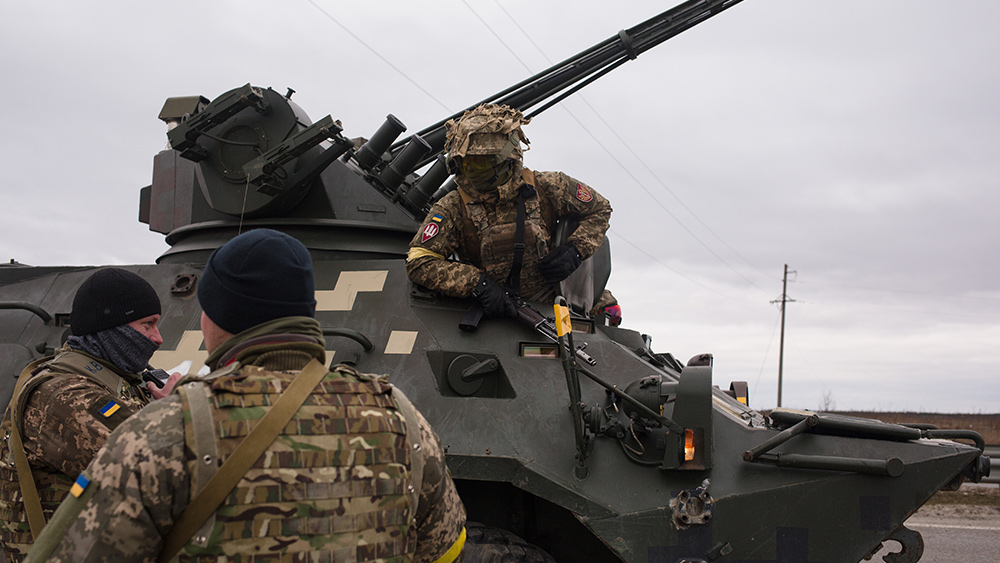



Ukraine’s Patriot missile stockpile runs dry as Trump-Zelensky feud boils over
By isabelle // Share

Thyroid diet myths busted: Broccoli is fine, but your fancy sea salt isn’t
By isabelle // Share