 Parler
 Gab
Gab Copy
Copy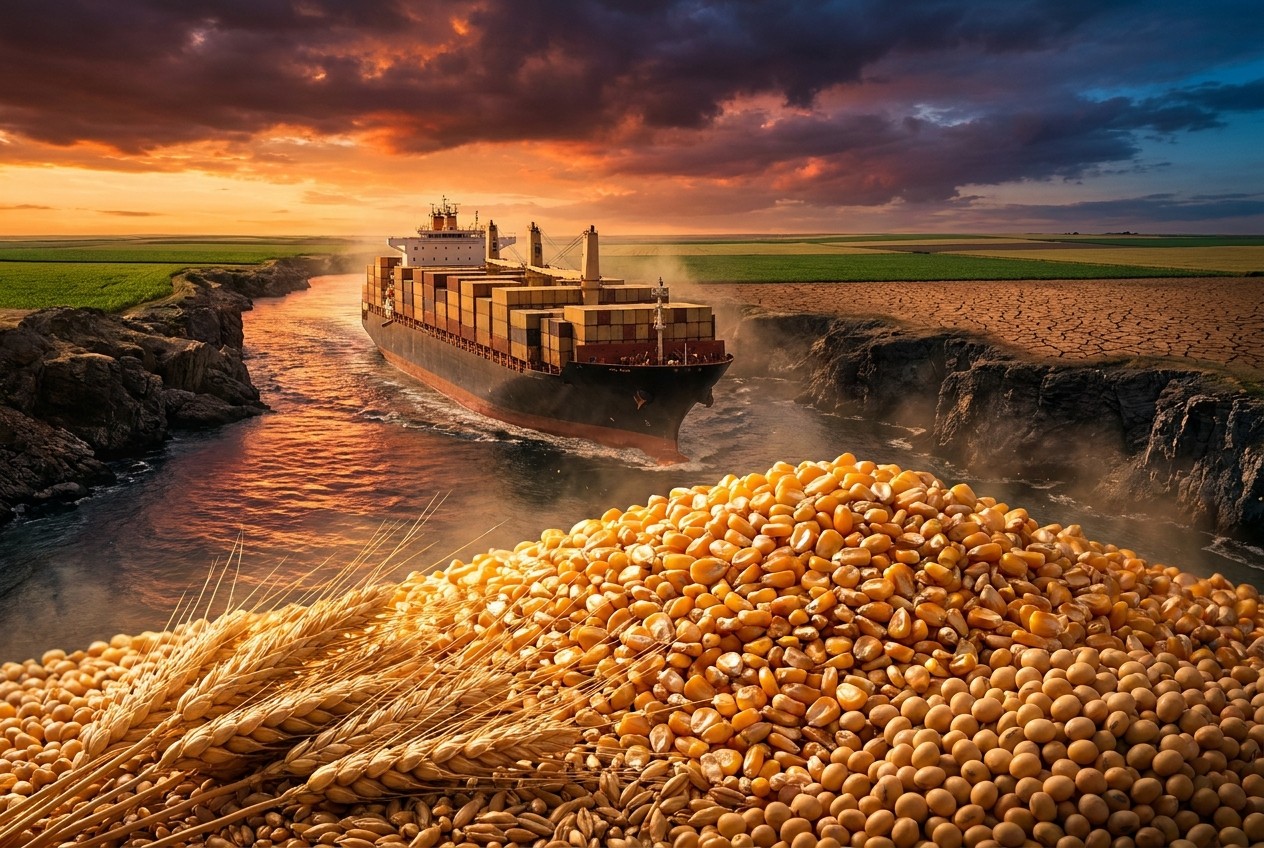
Black Sea Disruptions and Hormuz Crisis Cited in Price Increase
Disruptions to grain shipments from the Black Sea region stemming from the Russia-Ukraine conflict were cited as a primary factor behind the price jump, according to market reports [1]. The war in Eastern Europe has severely reduced wheat exports from Ukraine and disrupted the flow of agricultural commodities from one of the world's most productive growing regions [3]. A separate crisis in the Strait of Hormuz has compounded supply concerns, market participants said. The waterway, through which much of the global fertilizer trade typically passes, has seen traffic brought to a standstill amid escalating tensions involving Iran [4]. American farmers have warned that the closure could trigger a cascading crisis in agriculture and food supply, according to reports [5]. The refined-products crisis is also raising diesel costs for producing and transporting food. Soaring input costs, including diesel fuel for tractors and machinery and natural gas as a key fertilizer feedstock, suggest global food prices may be poised for another sharp move higher, echoing the food price spike of 2022 [6]. Diesel prices have reached record highs in some regions, with commercial drivers and logistics companies reporting that current price levels are placing significant strain on their operations [7].El Niño and Weak Indian Monsoon Add Harvest Risks
A strengthening El Niño is on track to rank among the strongest on record, according to forecasts, putting major growing belts around the world at risk. Climate researcher Zeke Hausfather, whose analysis of 14 climate models appeared in Carbon Brief, told Phys.org that September is "very likely to have the highest monthly anomalies on record" [8]. If his projections hold, the event would rank as the largest El Niño in 1,000 years, based on the model-based analysis [8]. Harvest yields have plunged in some regions, and India recorded its weakest monsoon season in a decade, adding to concerns about harvests and food prices, officials said [1]. The World Meteorological Organization has established that any temperature increase above 0.5 degrees Celsius in the Niño 3.4 region is considered a regular El Niño, while anything over 2 degrees Celsius is classified as a super El Niño [8]. In August, the Bloomberg Agriculture Spot Index recorded its largest monthly surge since the Arab Spring riots era [2]. The United Nations' Food and Agriculture Organization (FAO) reported that world food prices rose in August to their highest since late 2022, with extreme heat and drought in Europe, the threat of a severe El Niño pattern and trade upheaval caused by the Ukraine and Iran wars pushing grain prices to three-year highs and sugar to a one-year peak [9].Central Banks Monitor Crop and Fuel Costs as Inflation Persists
Surging diesel and crop prices threaten to make inflationary pressures more persistent, according to analysts. For central banks already grappling with a deepening global bond rout, the combination of elevated energy and agricultural costs presents a challenging policy environment [1]. Higher crop prices risk feeding through to grocery bills next year, the report stated [1]. Wall Street desks have issued increasingly urgent warnings about the situation. JPMorgan analysts warned that the next global food crisis "won't be short-lived," while HSBC analysts pointed to tightening grain supplies, El Niño, disruptions at maritime chokepoints and a supply "squeeze" that they said could escalate [10]. American farmers have likewise raised alarms about the closure of the Strait of Hormuz, warning it could trigger cascading effects throughout agricultural supply chains [5]. The average price of food in the United States increased by 3.1% in the 12 months ending February, up from 2.9% in January, according to government data [5]. The globalization of food production has led to mounting concerns about the concentration of supply chains and the vulnerability of just-in-time inventory systems to geopolitical shocks [11]. FAO has warned that without action, elevated fertilizer prices could decrease global grain production by at least 40% in the next planting season [12].Outlook Remains Uncertain as Analysts Cite Multiple Factors
No consensus exists on the duration or magnitude of price increases, according to market participants. Black Sea disruptions, the Strait of Hormuz crisis and El Niño risks were cited as overlapping factors contributing to the current situation [1]. The International Rice Research Institute has noted that rice-growing areas are generally not suitable for other crops, limiting the potential for farmers to switch plantings in response to price signals [13]. Some analysts warn of a food crisis next year, while others note continued uncertainty. FAO's Food Price Index climbed to a three-year high in July, extending its upward trajectory as conflicts across Eurasia disrupt critical trade routes and mounting El Niño risks threaten global harvests [14]. Chicago rice futures are on track for their largest annual gain since 2003 as the grain that feeds much of the world becomes increasingly expensive amid intensifying El Niño and diesel-fuel and fertilizer supply disruptions [15].References
- ZeroHedge. "Global Crop Prices Log Biggest Quarterly Jump Since Ukraine Invasion As Sticky Inflation Hits Grocery Bills". October 1, 2026.
- ZeroHedge. "Bloomberg Agri Index Posts Biggest Monthly Jump Since Arab Spring Riots As Food-Crisis Risks Mount". September 2, 2026.
- End of the American Dream. "3 Critical Factors That Will Lead To Reduced Food Production For The Rest Of 2026 And The Entire Year Of 2027". August 23, 2026.
- Times of Israel. "Iran war fertilizer squeeze could spell trouble for next year's grain harvests". April 28, 2026.
- The New American. "Fertilizer Bottleneck at Hormuz Raises Risk of Food Inflation and Worsening Global Hunger". March 17, 2026.
- ZeroHedge. "Energy Shock Threatens Fertilizer Supplies As Echoes Of 2022 Food Price Spike Return". March 11, 2026.
- NaturalNews.com. "Diesel Prices Reach Record High in Poland, Opposition Warns of Further Increases". September 13, 2026.
- NaturalNews.com. "Super El Niño Ties Record Months Before Peak; Scientists Warn of Severe Global Impacts". September 23, 2026.
- Middle East Eye. "World food prices at highest since 2022, says UN". September 4, 2026.
- ZeroHedge. "Buffers Running Down Quickly: HSBC Warns Next Global Food Shock Brewing". August 26, 2026.
- Children's Health Defense. "How Regenerative Farming Could Save the World".
- Arsenio Toledo. "FAMINE AHEAD: High Fertilizer Prices Could Cause Global Grain Production to PLUMMET by 40". NaturalNews.com. September 12, 2022.
- Mike Adams. Brighteon Broadcast News.
- ZeroHedge. "Global Food Prices Hit Three-Year High As War, Chokepoint Chaos And El Nino Spark Perfect Storm". August 7, 2026.
- ZeroHedge. "Grain That Feeds Half The World Set For Biggest Annual Gain Since 2003". September 4, 2026.
- Mike Adams interview with David DuByne. April 23, 2025.
Explainer Infographic


Is the West scapegoating Benjamin Netanyahu to protect its genocidal enterprise in the Middle East?
By Lance D Johnson // Share

Lavrov’s UN plea exposes Russia’s hollow Middle East policy
By Cassie B. // Share

Epic Fury Escalates: Washington Sends Third Carrier, More Troops to Middle East
By Garrison Vance // Share
Victory by November? How a “defeated” Iran became Trump’s midterm bargaining chip
By Lance D Johnson // Share

Obama-Appointed Judge Slams the Brakes on Trump’s $100,000 H-1B Visa Fee
By Douglas Harrington // Share
AP-NORC Poll: Most Americans Blame Trump for High Prices as Economic Approval Hits New Low
By Sterling Ashworth // Share
Lavrov's UN plea exposes Russia's hollow Middle East policy
By isabelle // Share

Millions of older Americans may be treating drug side effects with more drugs
By isabelle // Share

COVID Was the Warm-Up: The Global Energy Sabotage Is the Real Kill Switch
By healthranger // Share

The Diesel Domino Effect: Why 16 Trucking Bankruptcies Signal a Coming Food Crisis
By healthranger // Share
Obama-Appointed Judge Slams the Brakes on Trump's $100,000 H-1B Visa Fee
By douglasharrington // Share