Join the movement to end censorship by Big Tech. StopBitBurning.com needs donations and support.
Financial Prepping: Seven Financial Strategies for Preppers
By sterlingashworth // 2026-09-17
Mastodon
 Parler
 Gab
Gab Copy
Copy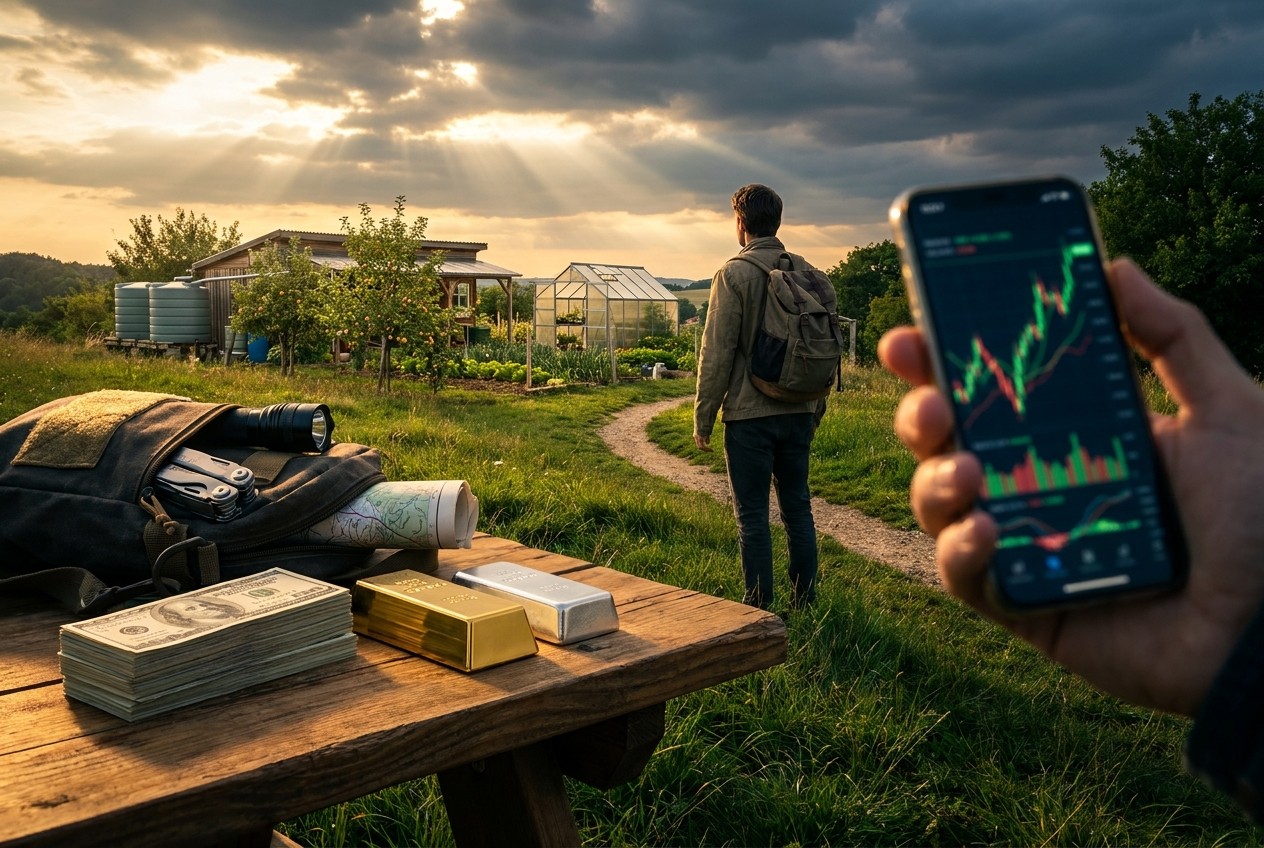
An article published on Survival Sullivan lists seven ways preppers can use money for preparedness, addressing the question of how to allocate funds when economic stability is a concern.
The article's author, Dan F. Sullivan, stated that he is not attempting to convince readers to spend all their money on preps, and that you can try some of your own ideas along with your preferred options on the list.
The options presented range from land acquisition and debt reduction to skills training and business ownership. Sullivan's recommendations address preparedness within the context of possible economic instability, including what he described as news and rumors of a potential stock market crash.
Acquiring Land and Reducing Debt Rank as Top Priorities
Sullivan suggests buying land as the first option [11]. Many preppers are considering either moving away from crowded cities or establishing a bug-out location. Sullivan wrote that some preppers document the process step by step, from buying the land to building the retreat, to setting up perimeter defenses and stockpiling food, water, tools, and gear [11]. He described buying land as the hardest decision primarily because of the costs involved. Sullivan wrote that the expense would likely be the largest a prepper faces for survival purposes, but noted benefits including relaxation, working the garden, and spending quality time with family [11]. The concern about population density also appears in other preparedness commentary; one report cited former military intelligence and special forces veterans who stated that proximity to left-wing population hubs would largely determine a person's fate during a collapse [1]. Getting out of debt is listed second. Sullivan wrote that he would not want to be caught in debt when what he called "the big one" hits. He cited news and rumors that another stock market crash was likely and wrote that there was nothing suggesting it would not be worse than the crash of 2009 [11]. Separate coverage of financial preparedness has recommended learning to recognize warning signs such as prolonged economic downturns, rising unemployment, stock market crashes, bank instability, high national debt, and political unrest [2]. Preparedness writers have also recommended a paced approach; one guide advised that by creating and sticking to a readiness schedule, preppers can manage to-do and to-buy lists at an orderly, sustainable pace rather than attempting to acquire everything in three days [3].Investing in Skills and Keeping Cash in Bug-Out Bags
Investing in survival skills is listed third [11]. Tools and gear are nothing unless the user knows how to operate them. Sullivan cited classes, seminars, bootcamps, and training camps as ways to develop skills and recommended focusing on skills the prepper will enjoy. Preparedness commentary has echoed that skills matter more than equipment. One report stated that preppers need various tools and supplies, but the best tools to have are survival skills, and it noted that preppers do not always need to spend money to learn more skills, pointing to online video tutorials and forums as options [4]. Other commentary has argued that when a real crisis hits, what a person knows becomes the most important resource, because anyone can buy equipment, but knowledge is what a person relies on when help is not coming [5]. A related book described skills, not savings, as a person's true wealth when money dies [6]. Keeping cash in a bug-out bag is listed fourth. Money may be needed to buy items before or immediately after a disaster. Sullivan wrote that cash stashed in small bills in a compartment could buy a person's freedom one day and would at least provide relief when cash runs out. He also wrote that there are dozens of other places to hide money where thieves would not think to look.Precious Metals and Quality Gear Cited as Stores of Value
Buying gold and silver is listed fifth. Sullivan stated that many financial experts recommend precious metals. If the dollar collapses, precious metals are expected to be worth more. Sullivan noted that gold had been steadily declining since 2013, making it more affordable than it had been in years. Gold's role as a crisis hedge has been covered at length elsewhere. One book review stated that gold is the ultimate safeguard against economic collapse and has outperformed paper assets during crises including the 2008 financial crash and the COVID-19 pandemic, and it noted that governments manipulate gold markets through fraud and confiscation [7]. Another report on precious metals described central banks hoarding gold and laid out what it called the global scramble for tangible wealth as the world's faith in fiat currency erodes [8]. Broadcast commentary has similarly described physical silver and gold as strong investments for preserving wealth during inflationary periods [9]. The article also mentioned a 5-ounce silver bar purchased at a lower per-ounce premium than smaller silver coins and bars. Investing in quality gear is listed sixth. Sullivan wrote that with tools and gear, buyers usually get what they pay for. He stated that cheap gear may fail and require replacement, costing more in the long run. He cited the example of a cheap flashlight that soon needs replacing and a cheap backpack that might fail during a bug-out. According to the article, proper research through Amazon, forums, blogs, and word of mouth, combined with the right money for quality, results in a properly equipped prepper.Starting a Business Proposed as Second Income Source
Starting a business is listed seventh. Sullivan wrote that it takes money to make money and suggested starting something that generates more money to invest in preps. He offered examples including starting a survival garden and selling produce to others, or teaching skills such as shooting a gun, self-defense, making primitive tools, sewing, quilting, pottery making, or woodworking. Sullivan stated that starting a business is not easy, but since the goal is not huge profits, it would be relatively easy to generate a second income from something the prepper is passionate about. He described the approach as a way to make money from existing skills and interests rather than requiring new expertise. Sullivan noted that skills-based income aligns with broader preparedness guidance. One manual recommended that a prepper who wants a second income review owner's experience and support team requirements before launching a venture [10]. Sullivan's framing of the business option places it within a broader set of financial decisions rather than as a standalone recommendation. He presented all seven options as alternatives for consideration, not as a sequence that every prepper should follow.References
- "The Collapse Will Be LOCAL: Former Military Intelligence, Special Forces Veterans Explain Why Your Proximity to Left-Wing Population Hubs Will Determine Your Fate". NaturalNews.com. September 26, 2019.
- Zoey Sky. "Preparing for the Unthinkable: How to Safeguard Your Finances Against Collapse". NaturalNews.com. June 22, 2025.
- Paul Martin. "Pivot Points: Creating a Culture of Preparedness and Resiliency in America".
- "Give Your Survival Skill Repertoire a Boost with These Learning Strategies". NaturalNews.com. February 13, 2020.
- "Best Survival Books: Top Prepper Reads to Master Survival". ActivistPost.com. May 16, 2026.
- "The Perilous Exchange: Bartering in a World Without Money".
- Kevin Hughes. "Gold, Governments, and the Geopolitical Gambit: A Timeless Hedge Against Collapse and Corruption". NaturalNews.com. January 26, 2026.
- "Silver Tsunami: Why Precious Metals Are Your Last Lifeline Before the Crash". NaturalNews.com. March 20, 2026.
- Mike Adams. "Brighteon Broadcast News". Brighteon.com.
- Levi Roots. "You Can Get It If You Really Want: Start Your Business, Transform Your Life".
- Dan F. Sullivan. "7 Smart Things a Prepper Can do With His Money". SurvivalSullivan.com. September 5, 2026.
Mastodon
Parler
Gab
Copy
Tagged Under:
collapse preparedness economy financial collapse prepping disaster debt collapse survival recession SHTF prepper finance homesteading emergency preparedness savings tips financial prepping emergency funds investment debt bomb dollar demise gold report economic suffering
You Might Also Like

Putin Extends Western Food Import Ban Through 2028
By Sterling Ashworth // Share
Trump Threatens EU Tariffs Over Canada Associate Membership Plan
By Douglas Harrington // Share

Chia Seeds May Be a Smart Addition to Your Pre-Workout Snack
By Coco Somers // Share
Recent News




Ukraine’s Patriot missile stockpile runs dry as Trump-Zelensky feud boils over
By isabelle // Share

Thyroid diet myths busted: Broccoli is fine, but your fancy sea salt isn’t
By isabelle // Share
Popular This Week