 Parler
 Gab
Gab Copy
Copy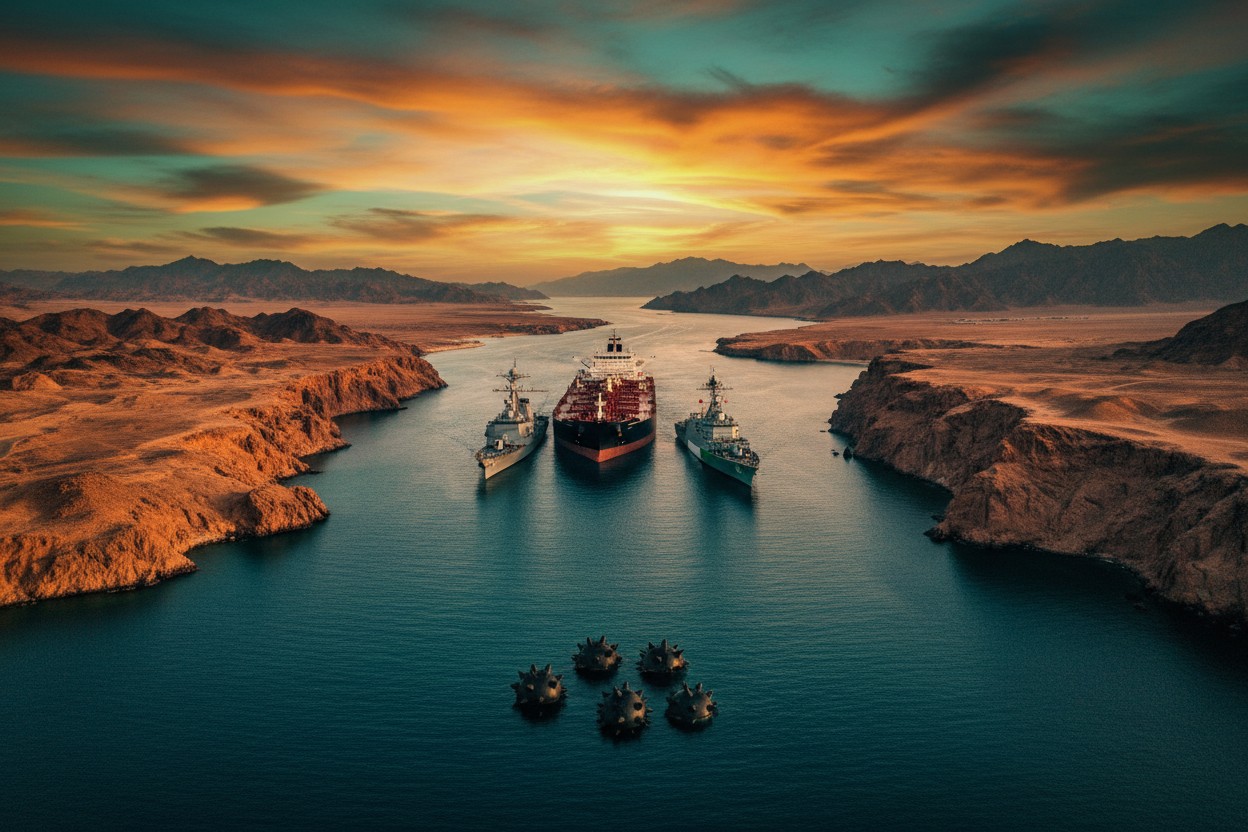
- Pakistan has held “productive” talks with Iran’s president on resolving the US-Iran conflict and restoring a prior memorandum of understanding.
- The United States and Israel began strikes on Iran in late February, with Tehran retaliating; a mid-June truce effort collapsed shortly after.
- The US has escalated economic pressure on Iran, branding a new sanctions push as “economic D-Day” targeting Tehran’s oil revenue.
- President Donald Trump claims the US Navy has cleared all mines from the Strait of Hormuz and warned Iran against re-mining the waterway.
- Iran’s Islamic Revolutionary Guard Corps says the US resorting to economic warfare signals defeat on the battlefield.
A Fragile Window Amid Economic Warfare
Pakistan emerged as a key intermediary on Tuesday, August 25, holding high-level talks with Iranian leadership to resolve the ongoing US-Iran conflict, even as Washington escalated its economic campaign against Tehran and President Donald Trump unilaterally declared the Strait of Hormuz free of naval mines. Pakistani Interior Minister Mohsin Naqvi reported “very positive and productive” discussions with Iranian President Masoud Pezeshkian in a statement posted on X, marking a rare diplomatic opening after months of direct military exchanges between Washington, Israel, and Tehran that began in late February. The talks focused on the Iran-US conflict, broader Middle East tensions, and steps to restore the Islamabad Memorandum of Understanding, a document signed in mid-June that briefly halted hostilities before collapsing under renewed strikes. The diplomatic overture comes as the Trump administration implements what Treasury Secretary Scott Bessent has called “economic D-Day” against Iranian financial networks, seeking to cripple oil revenue and force a settlement through financial hardship. With no active hostilities currently underway but no formal peace, the diplomatic channel represents a narrow, fragile window against a backdrop of continued military posturing and economic warfare.Pakistan’s Diplomatic Push: Restoring the Islamabad Accord
Naqvi, alongside Pakistani Chief of Army Staff Field Marshal Syed Asim Munir, met with Pezeshkian to discuss concrete steps required by both sides to restore the Islamabad Memorandum of Understanding. The minister said the Iranian president expressed his government’s concerns directly, and that Pakistan hopes the “significant progress” made during the talks will allow for further headway and lasting regional peace. The Islamabad accord, signed in mid-June, had represented the only formal cessation of hostilities since the conflict’s outbreak, but it unraveled quickly as both sides exchanged fresh strikes. Pakistan’s role as mediator carries historical weight, given its proximity to Iran, its significant Shia population, and its complex security relationship with Washington. The restoration of the memorandum could serve as the framework for a comprehensive settlement, though a White House official told Al Jazeera that the Trump administration is not presently engaged in negotiations with Tehran. The contradiction between Pakistan’s reported progress and Washington’s denial underscores the fragmented nature of current diplomacy, with third-party mediation operating in the absence of direct US-Iran communication.Strait of Hormuz: Trump Claims Demining Success
President Trump took to social media to declare that the US Navy has “removed and/or detonated” all mines within the international waters of the Strait of Hormuz, issuing a stark warning that any vessel attempting to lay new mines will be “immediately and systematically destroyed.” The claim comes amid a volatile maritime environment, with the International Maritime Organization recording 68 maritime incidents since the war began, including a ship disabled by an attack in the strait. The waterway remains strategically critical, carrying roughly 20% of global oil supplies, and any disruption threatens world energy markets. The US Navy’s demining operations, if accurate, represent a significant tactical achievement, but the threat of Iranian retaliation persists. Iran’s Islamic Revolutionary Guard Corps (IRGC) spokesperson Sardar Mohebi countered the US narrative, asserting that Washington’s resort to economic warfare itself proves defeat on the battlefield. The rhetoric on both sides indicates that while open combat has subsided, the conflict has shifted to economic, maritime, and psychological domains, each carrying the potential for renewed escalation.Economic D-Day: Sanctions and Strategic Pushback
The Trump administration has intensified its economic campaign, calling it a global crackdown on Iran’s financial networks that extends beyond Tehran to include countries and companies facilitating Iranian oil revenue. Treasury Secretary Bessent’s strategy aims to sever the financial lifelines that sustain Iran’s economy amid strained military budgets. However, key trading partners are resisting American pressure. China issued an official statement asserting that its cooperation with Iran should not be disrupted by US sanctions, signaling a potential diplomatic flashpoint with Beijing. Iran has stated it is prepared for the impact of the new measures, and the IRGC frames the sanctions as evidence of US military failure. The economic siege represents a calculated strategy to force Iranian capitulation through financial hardship rather than further military engagement, but historical precedent suggests that such pressure campaigns often harden regimes rather than break them. Iran’s vow to respond, combined with Chinese defiance, suggests the sanctions may isolate the US diplomatically even as they squeeze Tehran’s economy.Historical Repercussions and Future Uncertainty
The current standstill carries echoes of past US-Iran confrontations, from the 1953 coup to the 2015 nuclear deal’s rise and fall, patterns that suggest military and economic coercion rarely produce lasting resolutions. The stakes remain existential for regional stability, energy security, and global geopolitical alignment. Russia and China could exploit continued chaos by arming Iran while undermining US influence, and a prolonged conflict carries catastrophic humanitarian implications. Pakistan’s mediation offers a potential off-ramp, but with Washington denying direct talks and Tehran vowing sanctions resistance, the path to de-escalation remains unclear. The restoration of the Islamabad memorandum could represent the best available framework for peace, but whether both sides possess the political will to revive it—rather than risk another costly escalation—remains the defining question. Without a genuine diplomatic commitment from Washington and Tehran, the region faces a future of recurring crises, economic warfare, and the ever-present risk of accidental conflict in one of the world’s most volatile regions. Sources for this article include: SputnikGlobe.com Aljazeera.com DW.com
Majority of Poles reject sending Patriot missiles to Ukraine, new poll shows
By Cassie B. // Share
Russian Forces Strike Energy Facilities in Odessa, Says Defense Ministry
By Garrison Vance // Share
Corpus Christi, Long Beach Selected for Small Modular Reactor Integration at U.S. Ports
By Belle Carter // Share

AI Chatbots May Be Shaping Human Behavior to Be More Robotic, Study Suggests
By Chase Codewell // Share

Florida joins Texas in ordering removal of Flock license plate cameras
By Cassie B. // Share
U.S. Launches Strikes on Iran as Trump Threatens Further Action
By Garrison Vance // Share


Ukraine’s Patriot missile stockpile runs dry as Trump-Zelensky feud boils over
By isabelle // Share

Thyroid diet myths busted: Broccoli is fine, but your fancy sea salt isn’t
By isabelle // Share