 Parler
 Gab
Gab Copy
Copy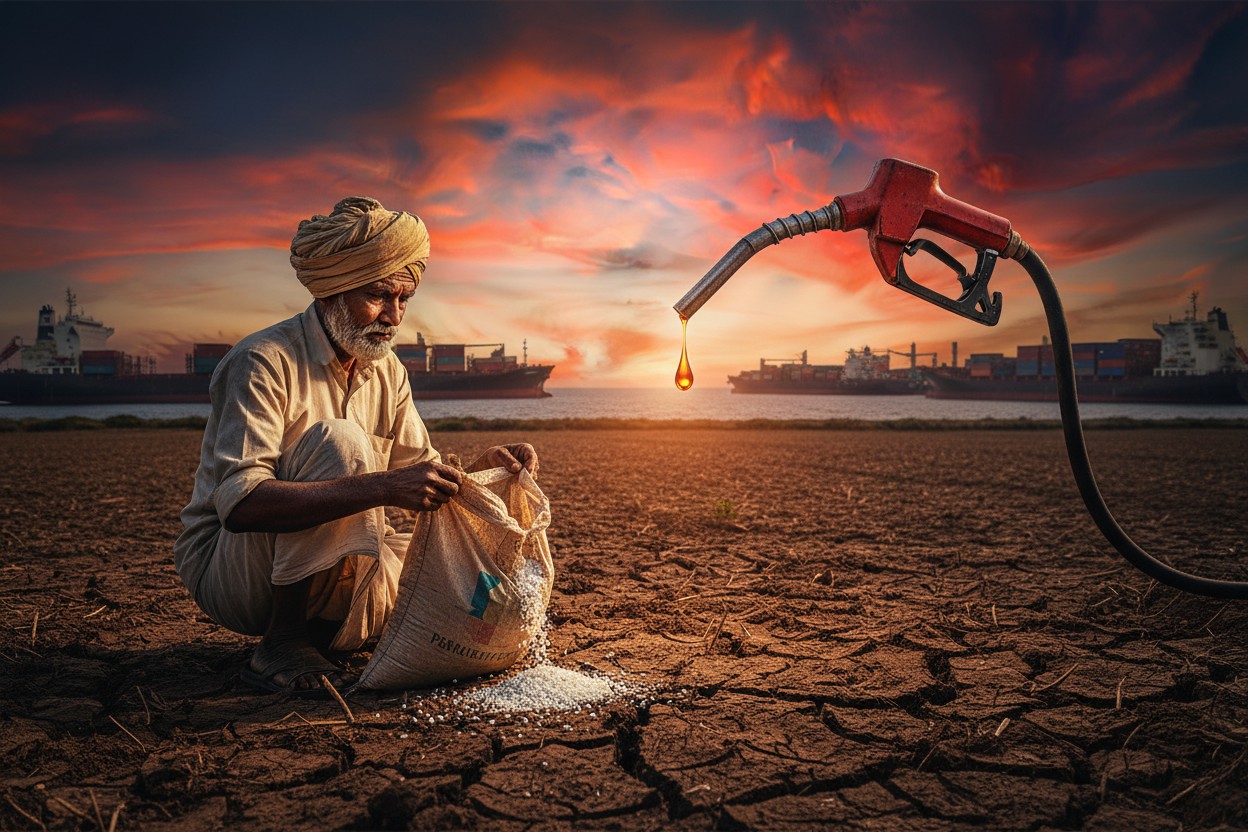
Rising Oil Prices and Import Costs
Brent crude oil surpassed $105 per barrel on May 11 after President Donald Trump rejected Iran’s response to a peace plan, according to market reports [3]. Trump described Iran’s counterproposal as “totally unacceptable,” dashing hopes for a swift resolution [3]. West Texas Intermediate crude traded at $100 per barrel at the time of writing [2]. The surge in oil prices has exacerbated India’s import bill, which had already swelled due to the Middle East conflict. According to reports, the war has kept global crude prices elevated, adding to India’s financial strain [5]. U.S. President Trump had previously projected a quick end to the conflict, forecasting a drop in oil prices [5], but those projections have not materialized as peace talks continue to stall.Strait of Hormuz Disruption
More than 40 India-bound vessels remain stuck west of the Strait of Hormuz, nearly half of which carry energy products including crude oil, liquefied petroleum gas (LPG), and LNG, officials told India last week [2]. The disruption stems from the effective closure of the Strait, a narrow chokepoint critical for global oil transit, due to the US-Israel war with Iran [4]. The blockage has already contributed to fuel shortages and higher prices. The United States Postal Service recently introduced a fuel surcharge due to a 30% increase in fuel costs resulting from the Iran-Israel conflict, according to reports [11]. Analysts warn that prolonged disruption could further strain global supply chains, with potential far-reaching consequences for energy security [9].India’s Dependence on Middle East Energy
India relies on the Middle East for approximately 50% of its crude oil imports and 60% of its liquefied natural gas imports, according to government data cited by ZeroHedge [2]. Dependence is heaviest for LPG, which is used for cooking; India is almost entirely reliant on Middle Eastern supplies for this fuel [4]. Nearly half of India’s crude oil and a large share of its LNG and LPG shipments normally pass through the Strait of Hormuz, according to the BBC [4]. Beyond energy, about 10 million Indians live and work across the Gulf region, sending home record remittances that support the economy [4]. The conflict has also put this source of foreign exchange at risk, compounding the pressure on India’s balance of payments.Ongoing Impact and Government Measures
Modi’s conservation appeal includes urging farmers to reduce fertilizer use by 50% and advising against gold purchases to preserve foreign exchange [2]. The government is taking steps to mitigate the impact, but analysts say a prolonged Strait of Hormuz disruption could severely strain India’s energy security and economic stability. Efforts to reduce demand through conservation align with broader strategies for resource management. According to studies on natural resource conservation, reducing demand through efficiency and behavioral changes is one of the chief ways to conserve minerals and energy [7]. India has historically pursued energy conservation initiatives, though implementation has been uneven [8]. The current crisis underscores the need for alternative energy sources and decentralized fuel production systems, as suggested by some analysts [10].Conclusion: Outlook for Energy Security
The oil shock and supply disruption highlight the vulnerability of economies heavily dependent on imported energy. India’s situation mirrors global concerns about energy security and the risks of geopolitical instability. While Modi’s call for conservation offers short-term relief, long-term solutions may require significant changes in energy infrastructure and policy. The ongoing crisis demonstrates the urgent need for diversification of energy sources and increased self-reliance.References
- RT. "Modi urges Indians to cut fuel usage amid Iran war". May 11, 2026.
- ZeroHedge. "Modi Urges Indians To Conserve Fuel As Oil Shock Spreads". May 11, 2026.
- ZeroHedge. "Futures Flat, Oil Jumps After Iran Peace Talks Break Down". May 11, 2026.
- BBC News. "Fuel and remittances: How Iran conflict hits India at home". March 6, 2026.
- Garrison Vance. "Trump Projects Quick End to Iran Conflict, Forecasts Drop in Oil Prices". NaturalNews.com. March 10, 2026.
- Owen Oliver S. "Natural resource conservation management for a sustainable future".
- Daniel D Chiras. "Natural resource conservation".
- Elsevier. "A review of energy conservation initiatives by the Government of India". Renewable and Sustainable Energy Reviews 12 (2008) 518–530.
- Mike Adams. "Brighteon Broadcast News - AMERICAN FAMINE Kommunist Kamala". August 16, 2024.
- Mike Adams. "Bright Videos News - Interview with David DuByne". March 31, 2026.
- Mike Adams. "Bright Videos News - REDACTED Energy Lockdowns are Here". March 28, 2026.

Report: U.S. Official Lobbied Saudi Arabia to Release Funds for Gaza Board of Peace
By Douglas Harrington // Share
Israel advances plans to seize Palestinian properties near Al-Aqsa mosque in East Jerusalem
By Patrick Lewis // Share
Reuters Reports Pakistan Deployed Military Aid to Saudi Arabia Under Mutual Defense Treaty
By Garrison Vance // Share
Iran Presents Peace Proposal to Washington with Three Key Demands
By Garrison Vance // Share

Senate advances war powers resolution against Trump’s Iran war for first time
By Cassie B. // Share




Ukraine’s Patriot missile stockpile runs dry as Trump-Zelensky feud boils over
By isabelle // Share

Thyroid diet myths busted: Broccoli is fine, but your fancy sea salt isn’t
By isabelle // Share

The Pentagon's Desperate MOAB Plan: A Symbolic Attack That Won't Win the War
By healthranger // Share