 Parler
 Gab
Gab Copy
Copy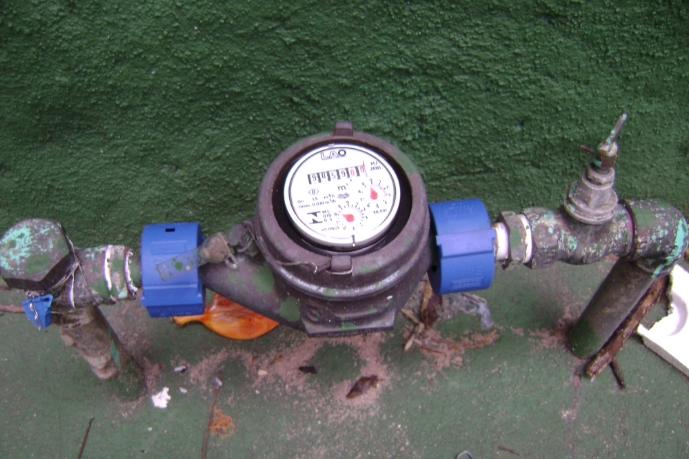
- Amarillo residents report water bills surging 300% after digital smart meters and new billing system installed.
- City blames drought, seasonal watering and leaks; residents deny plumbing issues.
- Two residents saw usage jump from 11,000 to 44,000 gallons, bills rising from $118 to $307.
- City declined interview, citing need to review individual accounts before drawing conclusions.
- Proposed Utah hyperscale data center would consume 9 gigawatts—double Utah's entire current usage—raising concerns about water diversion.
Digital disconnect: How smart meters are emptying pockets
Water bills in Amarillo, Texas, have tripled overnight, and residents believe the culprit is not a leaky toilet but the city's new digital tracking system. The spike comes as Western communities grapple with drought, depleted aquifers and the looming specter of water being diverted to power the nation's exploding data center industry—a combination that threatens to transform how water is priced, tracked, and allocated. Cleat Bell saw his water usage jump from 11,000 gallons to 44,000 gallons in one month. His bill rose from $118 to $307. Bear Thomas reported similar shock, saying the city's digital smart meters and new billing system produced a phantom 25,000 gallons on his account. Both men said city officials dismissed their concerns. Bell was told to pay the bill or call a plumber. Thomas was told he likely had a leaky toilet. "I know I don't have leaks," Bell said. The city declined an interview but provided a statement blaming drought conditions, seasonal outdoor watering and the new billing system's enhanced visibility into usage patterns.A new era of digital surveillance
The City of Amarillo's digital meter project has been underway for years. The new utility billing system, officials said, did not change how water is measured but provided customers with daily and hourly consumption data for the first time. "Many customers already had digital meters installed prior to the recent utility billing system implementation," the city stated. "The new system provides more detailed visibility into when and how water is being used. In many cases, this can help identify irrigation usage, leaks or other patterns that may not have previously been as noticeable." Thomas, who spent 25 years in the billing industry, disputed the city's explanation. He said the city lacked basic account information, including his driver's license and Social Security number, and had no usage history to compare against. "It's probably the computer that they put in there," Thomas said. "We spent a good amount of money to replace that computer system. And I think we got just really screwed on that."The data center threat: What comes next
The Amarillo billing crisis arrives as Western states confront a massive shift in water demand driven by data centers. In Utah, a proposed hyperscale facility called the Stratos Project would require 9 gigawatts of energy—more than double what the entire state of Utah currently uses. That electricity demand, primarily for cooling vast server farms, has direct implications for water. Data centers consume enormous quantities of water for cooling systems, and the proposed Box Elder County project would dump waste heat equivalent to 23 atomic bombs daily into the local environment, according to Utah State University physics professor Robert Davies. "The thermal heat island effect could actually increase with a nuclear reactor instead of a gas plant," Davies said, describing a scenario where temperatures could rise 5 degrees Fahrenheit during the day and 28 degrees at night. For communities like Amarillo, already struggling with drought, the emergence of data centers as water consumers creates a new pressure point. If digital meters enable precise tracking of every gallon, the infrastructure exists to reallocate water from residential use to industrial applications.The San Luis Valley precedent
The pattern of water scarcity driving pricing changes is not new. In Colorado's San Luis Valley, a region spanning roughly the size of Massachusetts, communities have faced a similar reckoning. The valley's unconfined aquifer has lost 1 million acre-feet of water since 2002 due to persistent drought and overuse. State Sen. Cleave Simpson, a fourth-generation farmer and former manager of the Rio Grande Water Conservation District, warned that communities face a deadline to replenish the aquifer or risk state shutdowns on irrigation wells. "We're a decade ahead of what's happening in the rest of Colorado," Simpson said. "This is not just drought anymore; it's truly the aridification of the West." The Rio Grande Water Conservation District secured $30 million in federal funding to compensate farmers $3,000 per acre-foot of water to permanently retire irrigation wells. Farmers like John Mestas, whose family settled in the valley over a century ago when "water was abundant," now voluntarily pump their own irrigation wells to sustain operations.The bottom line: Who gets the water?
The intersection of digital water tracking, data center expansion and long-term drought creates a fundamental question: as water becomes scarcer, who decides how it is allocated? In the San Luis Valley, researchers have documented rising arsenic levels in private wells as drought reduces the dilution of naturally occurring contaminants. Kathy James, an epidemiologist at the Colorado School of Public Health, is testing 1,000 private wells to explore connections between drought, water quality and health. Nationwide, about 40 million people rely on domestic wells. In Nevada, Arizona and Maine, up to 25% of well users have elevated arsenic levels. During droughts, the number of Americans exposed to high-arsenic domestic wells may rise from 2.7 million to 4.1 million, according to U.S. Geological Survey hydrologist Melissa Lombard.A system under pressure
Amarillo's billing crisis reveals what happens when technology designed for efficiency collides with community trust. The city's digital meters can track every drop, but residents question whether the system is accurate—and who benefits from the data it collects. As data centers consume ever more water and energy, the infrastructure to monitor and meter water use becomes more valuable. The same technology that produces shockingly high bills for Amarillo homeowners could just as easily divert water to industrial users willing to pay premium prices. For residents like Bell and Thomas, the immediate question is whether their bills are accurate. The broader question—for Amarillo, for Utah and for the entire arid West—is whether digital tracking of water will ultimately serve residents or the data centers that are reshaping the region's water future. Sources for this article include: ABC7Amarillo.com MyHighPlains.com SLTRrib.com NPR.org
The $35 Million Epstein-Iran War coverup: How Trump and AIPAC ousted the principled Thomas Massie
By Lance D Johnson // Share

Senators Propose Legislation to Regulate AI Chatbots Over Child Safety Concerns
By Chase Codewell // Share

Study: Seven-Day Water-Only Fasting Triggers Major Biological Shifts After Three Days
By Morgan S. Verity // Share

Experts Identify Five Healthiest Drinks Beyond Water, With Emphasis on Quality and Sourcing
By Coco Somers // Share

Trump’s Compensation Fund: A Real Step Toward Justice or Just Another Empty Promise?
By Mike Adams // Share

HHS withdraws vaccine panel charter amid controversy over Kennedy’s overhaul
By Willow Tohi // Share




Ukraine’s Patriot missile stockpile runs dry as Trump-Zelensky feud boils over
By isabelle // Share

Thyroid diet myths busted: Broccoli is fine, but your fancy sea salt isn’t
By isabelle // Share

The Pentagon's Desperate MOAB Plan: A Symbolic Attack That Won't Win the War
By healthranger // Share